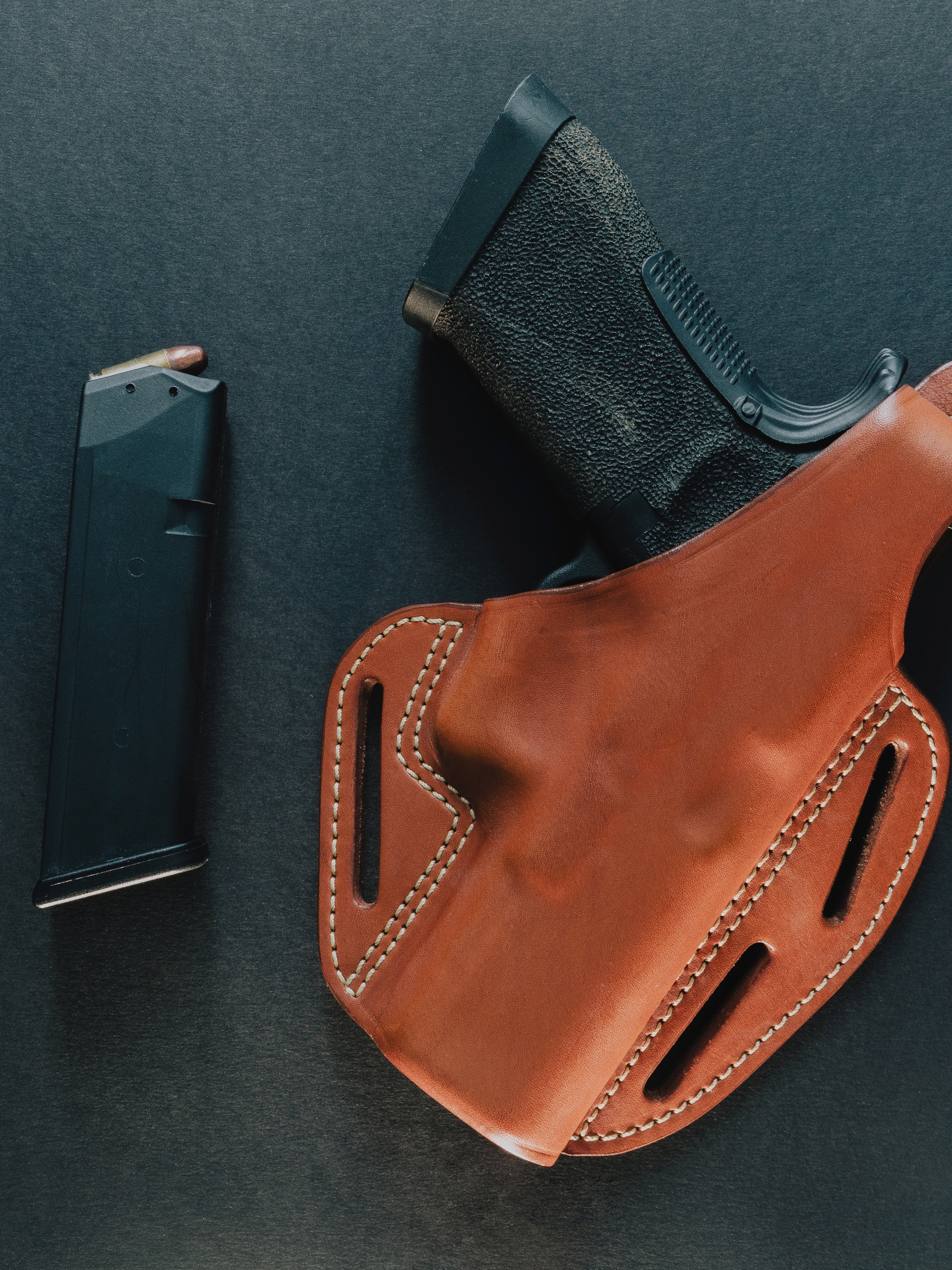
Buying a holster without knowing the basic terminology often leads to poor fit, slow draw times, or unnecessary discomfort. The holster terminology you need to know before buying becomes especially important when selecting gear for training, concealed carry, or competition use.
Retention Levels
Retention refers to how securely a holster holds the firearm. Passive retention relies on friction and molded pressure around the pistol. Active retention adds a mechanical release, such as a thumb break or locking lever.
Competition shooters usually prefer fast passive retention. Duty applications often require active retention for additional weapon security.
Cant and Ride Height
Cant describes the angle of the firearm inside the holster. Forward cant tilts the grip toward the body, helping concealment and draw efficiency.
Ride height determines how high or low the pistol sits. A low ride may improve stability, while a higher ride often speeds up access.
IWB and OWB Carry
IWB stands for inside-the-waistband carry. These holsters ride between the body and waistband, making concealment easier. Slim profiles and adjustable cant angles matter in this category.
OWB means outside-the-waistband carry. Faster access and increased comfort make OWB popular for range work and training sessions.
Appendix Carry
Appendix carry positions the holster near the front of the waistband. Fast presentation and improved concealment make it increasingly popular among experienced carriers.
Holster geometry becomes critical in appendix setups. Features like concealment wings and adjustable wedges improve comfort and reduce printing.
Kydex, Polymer, and Leather
Material choice affects durability and draw consistency. Kydex and molded polymer maintain shape under hard use and adverse weather. Leather provides flexibility and traditional styling but requires more maintenance.
Those comparing minimalist and full coverage holsters should evaluate trigger protection, comfort, and environmental exposure before choosing a holster material and style.
Optics and Light Compatibility
Modern pistols frequently include red dot optics and weapon-mounted lights. Holsters designed for these accessories use enlarged channels and reinforced openings.
Compatibility matters because improperly fitted holsters may interfere with retention or safe reholstering.
Choosing Gear With Confidence
Holster selection involves more than appearance or brand recognition. Carry style, training goals, and firearm configuration all influence the right setup. Learning holster terminology before buying and exploring each term provided in gear specs will give you a stronger chance of finding the perfect fit.

Casey Cartwright
Latest posts by Casey Cartwright (see all)
- How To Build the Ultimate Private Hunting Property – October 1, 2026
- Building a Practical Setup for Hunting & Outdoor Recreation – October 1, 2026
- How To Maintain a Trailer for Hunting Season – October 1, 2026

Leave a Reply